AI Product Customization Platforms

From AI Design to Personalized Product Delivery

Connect product selection, uploaded designs, AI generation, editing and previews with checkout, payment, production, delivery and customer operations. Built for personalized consumer goods, from clothing to gifts.

AI consumer product customization platform connects the interface of creative generation, online editing and multi-product preview
AI generation and online design Upload materials, generate creative ideas, edit patterns and text, and adjust them in real time according to product customization areas.
Preview, trade and produce Connect effect confirmation, content review, payment, production documents, order status and logistics delivery.
$11,900 from
Content, design and trading system

Twelve Core Areas for Customizable Products

Each area is designed around real merchandise, customization rules, and order status. The page vision uses the same consumer brand, product and design language, and presents the corresponding front-end or business system interface respectively.

Discuss business scope
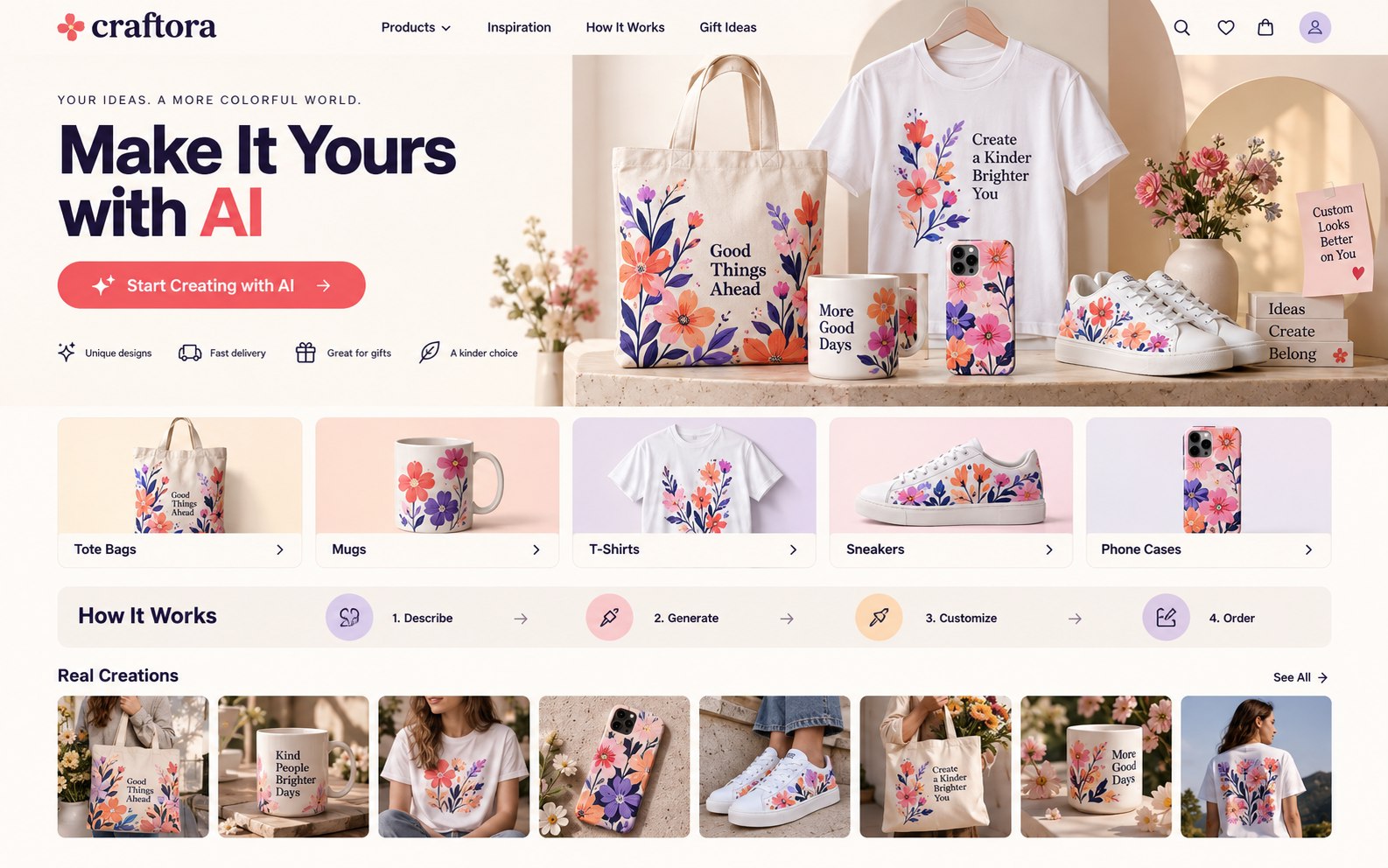
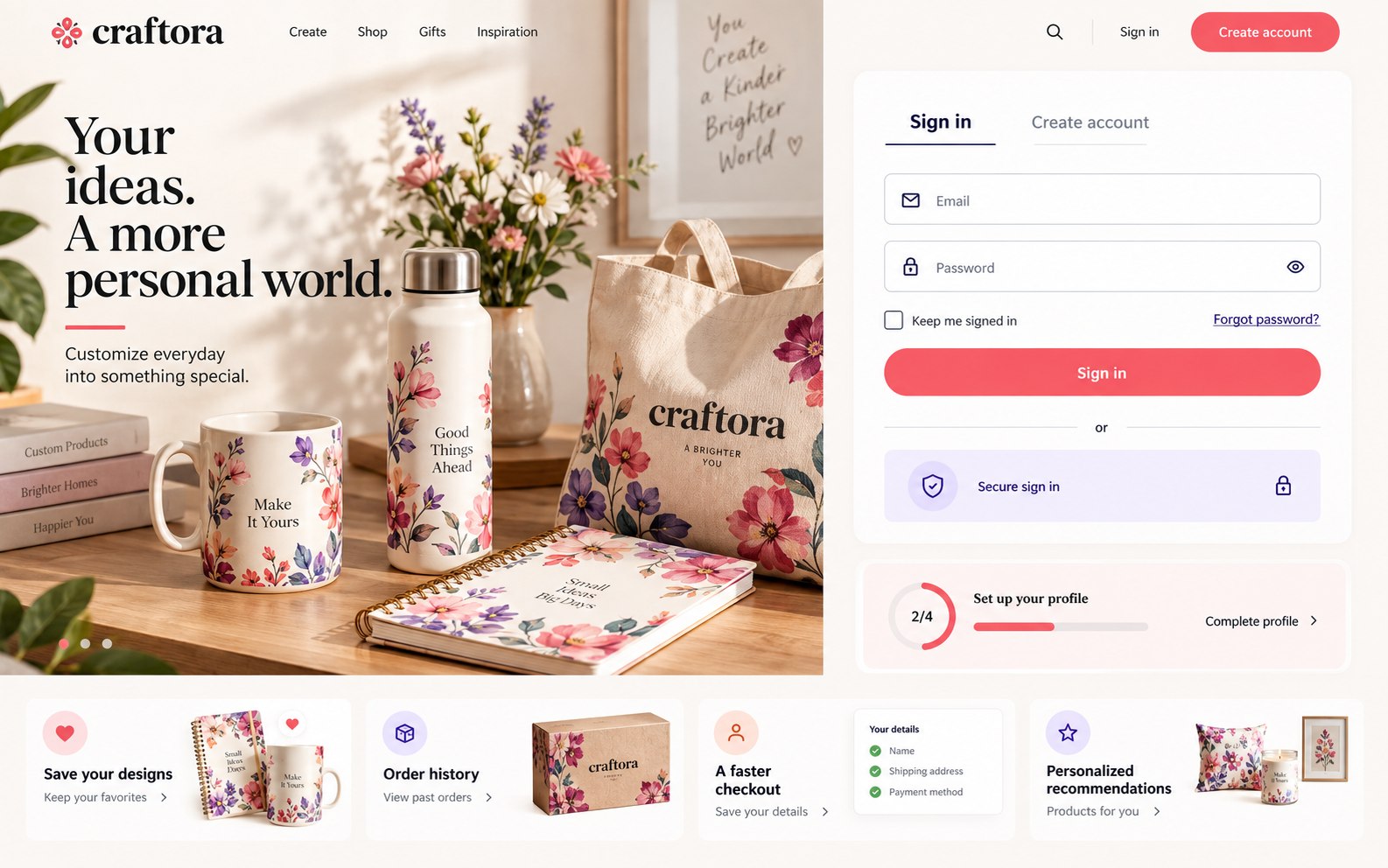
AI consumer goods customization platform mall homepage interface
01 · Home

Homepage: Products and Customization

It centrally presents customizable products, creation methods, delivery commitments and real-life scenarios, guiding consumers to immediately start AI design or browse products.

  • Product classification and theme recommendations
  • AI creation entrance and process
  • Work inspiration and application scenarios
  • Delivery, after-sales and trust information
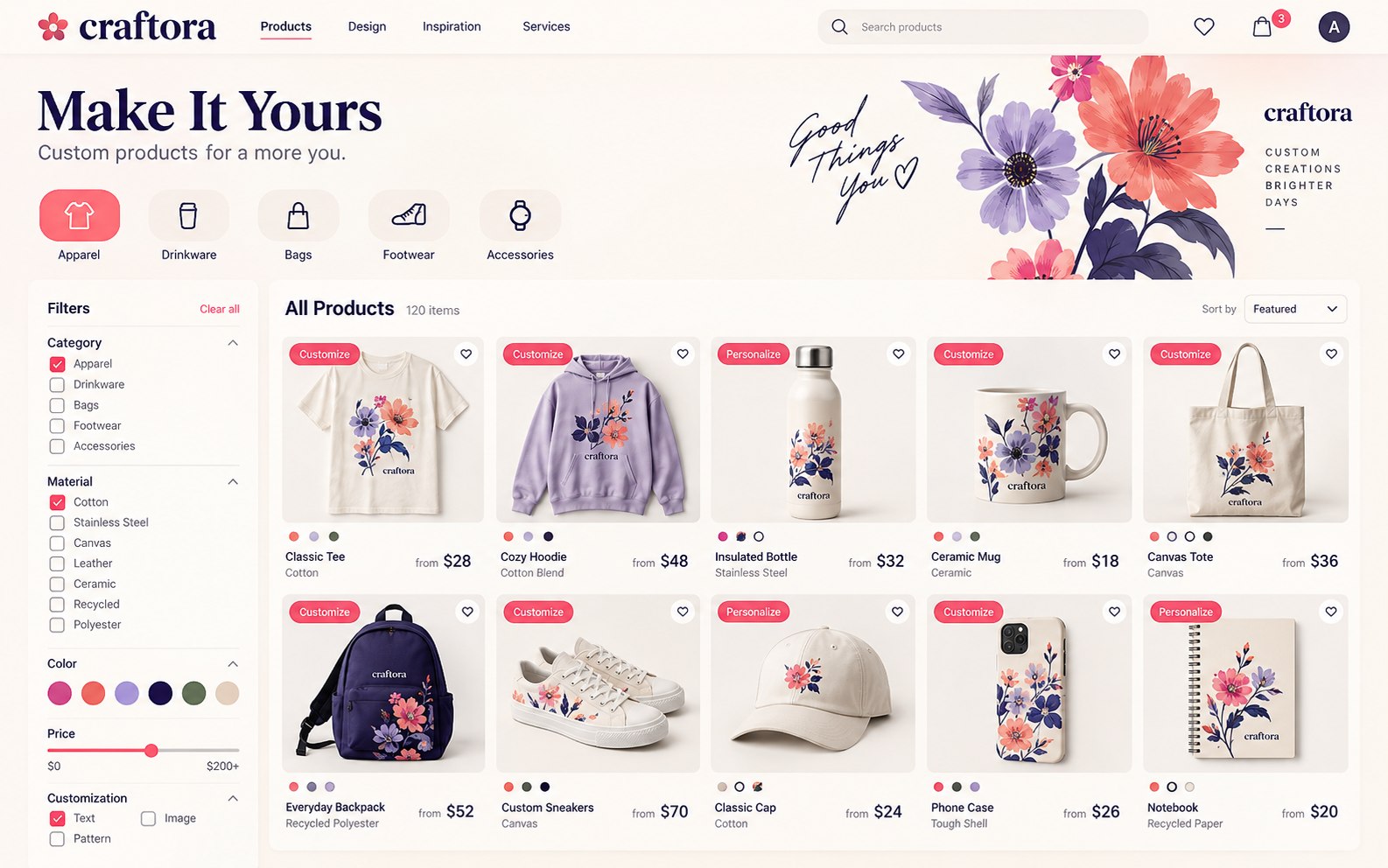
Customizable product service pages for clothing, cups, bags, footwear and accessories
02 · Products

Products: Browse by Need and Capability

Let consumers understand materials, specifications, colors, customizable areas, production processes and starting prices, so as to avoid choosing products only to find out that they are impossible to achieve.

  • Product classification, filtering and search
  • SKU, material and color
  • Customizable areas and processes
  • Price, delivery and production boundaries
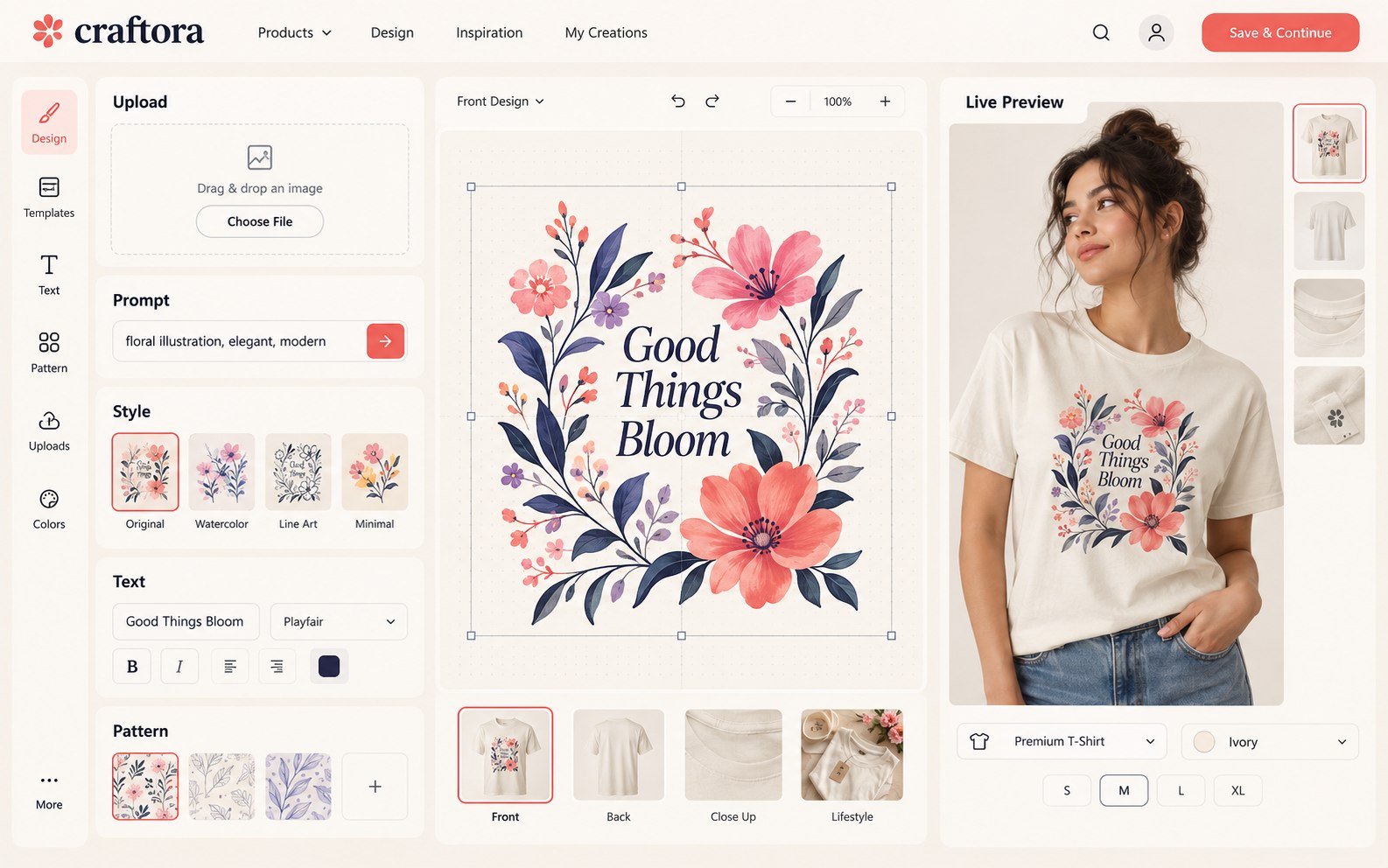
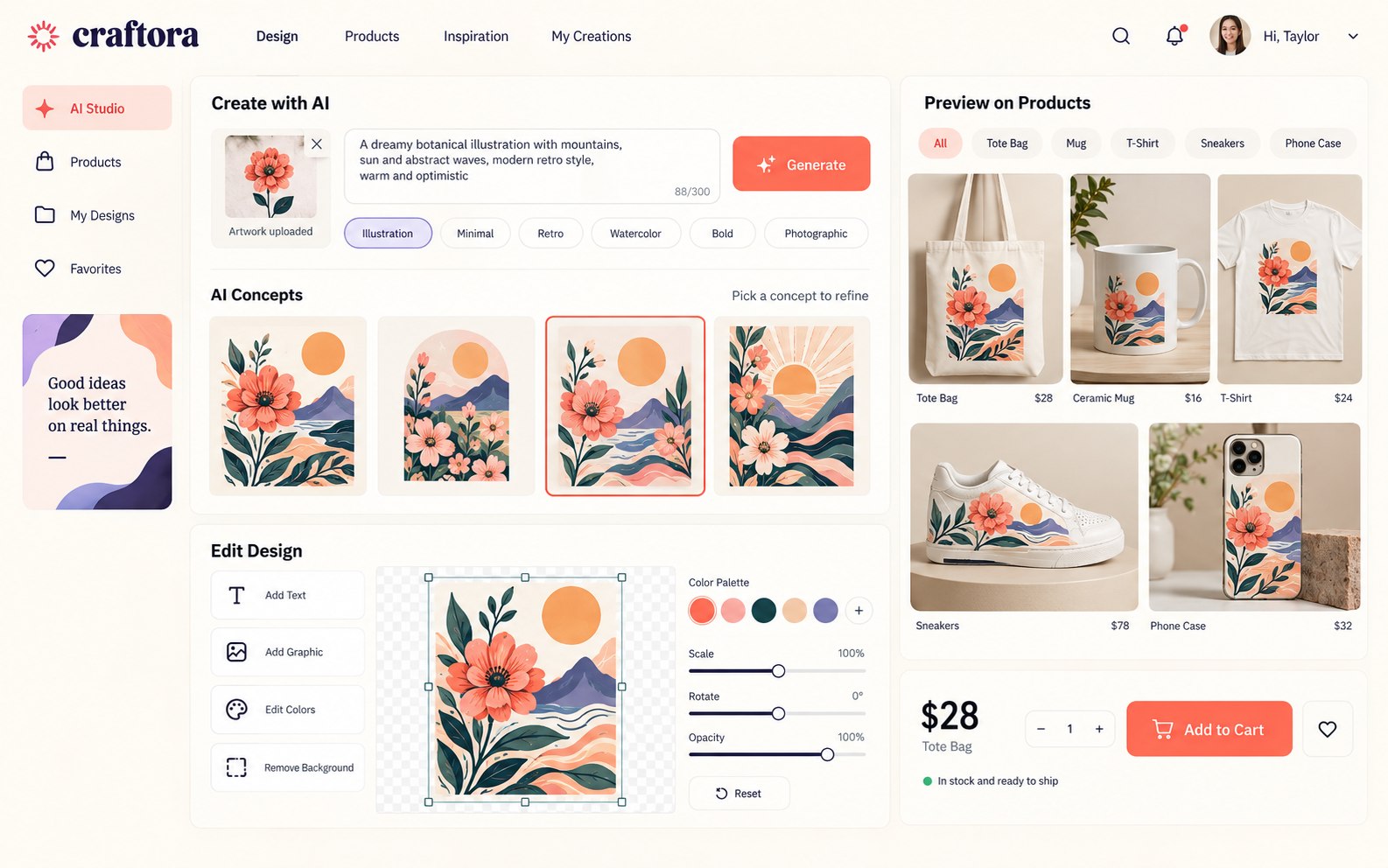
AI custom design page to upload materials, edit patterns and preview T-shirt effects
03 · AI Design

AI Design: Create from Ideas and Materials

Consumers can upload pictures, enter design requirements, select styles and edit text, patterns, colors, positions and sizes, and then view a preview of the corresponding products.

  • Material upload and image processing
  • Prompt words and style templates
  • Text, graphics and layout editing
  • Front and back sides and customized area switching
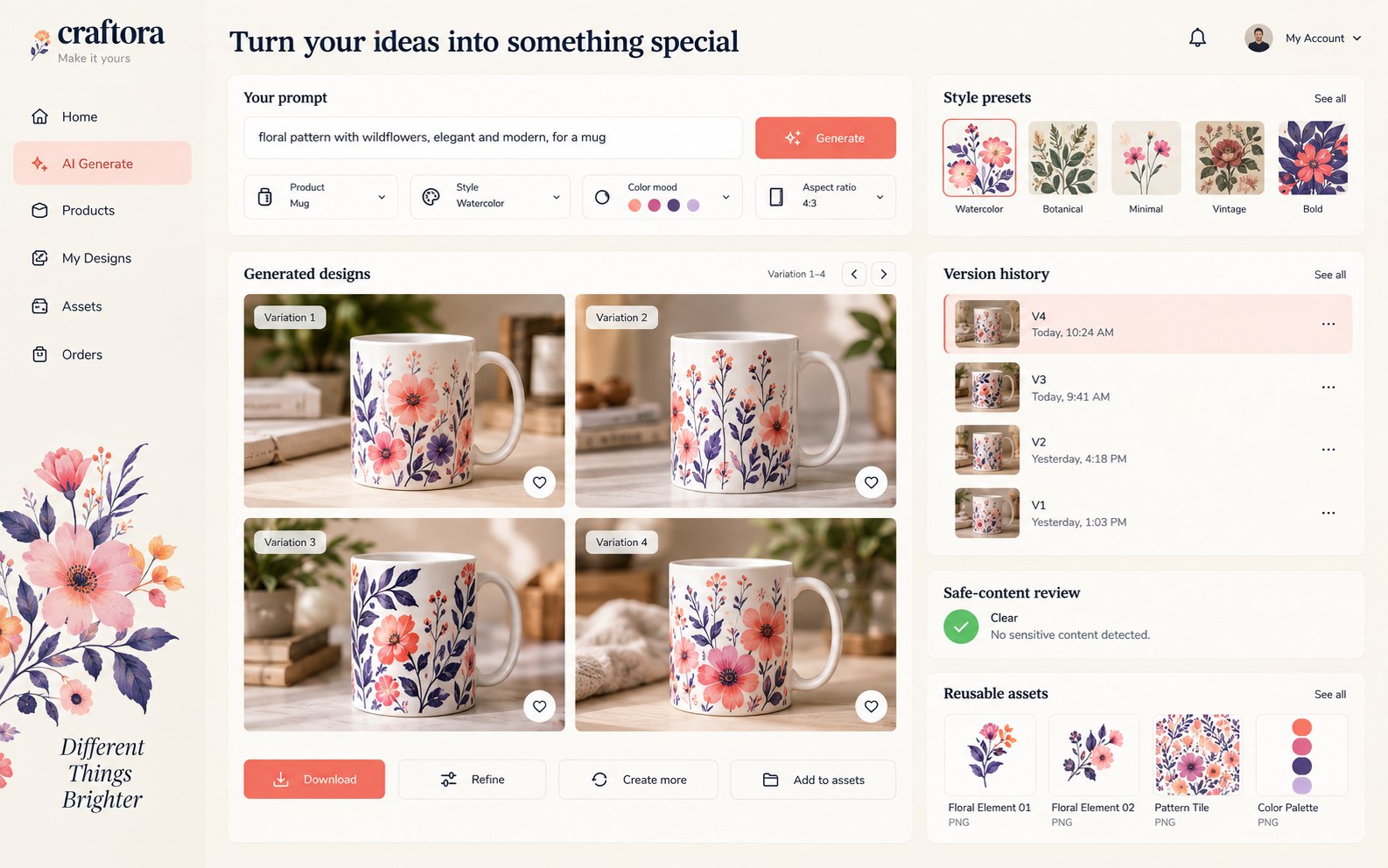
AI-generated engine-style templates, design variations, and content moderation interfaces
04 · AI Engine

AI Engine: Models, Styles and Review

Incorporate generation parameters, style templates, available models, consumption, output versions and review status into unified rules to take into account both creative experience and operational risks.

  • Model routing and generation parameters
  • Style templates and design variations
  • Task queues, versions and costs
  • Input and output auditing and logging
AI customization platform customer registration, login and account rights page
05 · Account Access

Customer Accounts: Designs, Addresses and Orders

Establish consumer accounts and necessary permissions so that design drafts, materials, receipt information, payment results and after-sales records can be attributed to the correct customer.

  • Registration, login and password retrieval
  • Profile and address book
  • Design drafts and collections
  • Privacy authorization and security logs
Shopping cart page with personalized cups, bags and clothing
06 · Cart

Cart: Confirm Designs and Specifications

Confirm the product, SKU, design preview, customization surface, quantity, price, production cycle and delivery method before settlement to reduce the risk of wrong orders for personalized products.

  • Customized thumbnails and design versions
  • SKU, color, size and quantity
  • Production time and delivery options
  • Prices, offers and exceptions
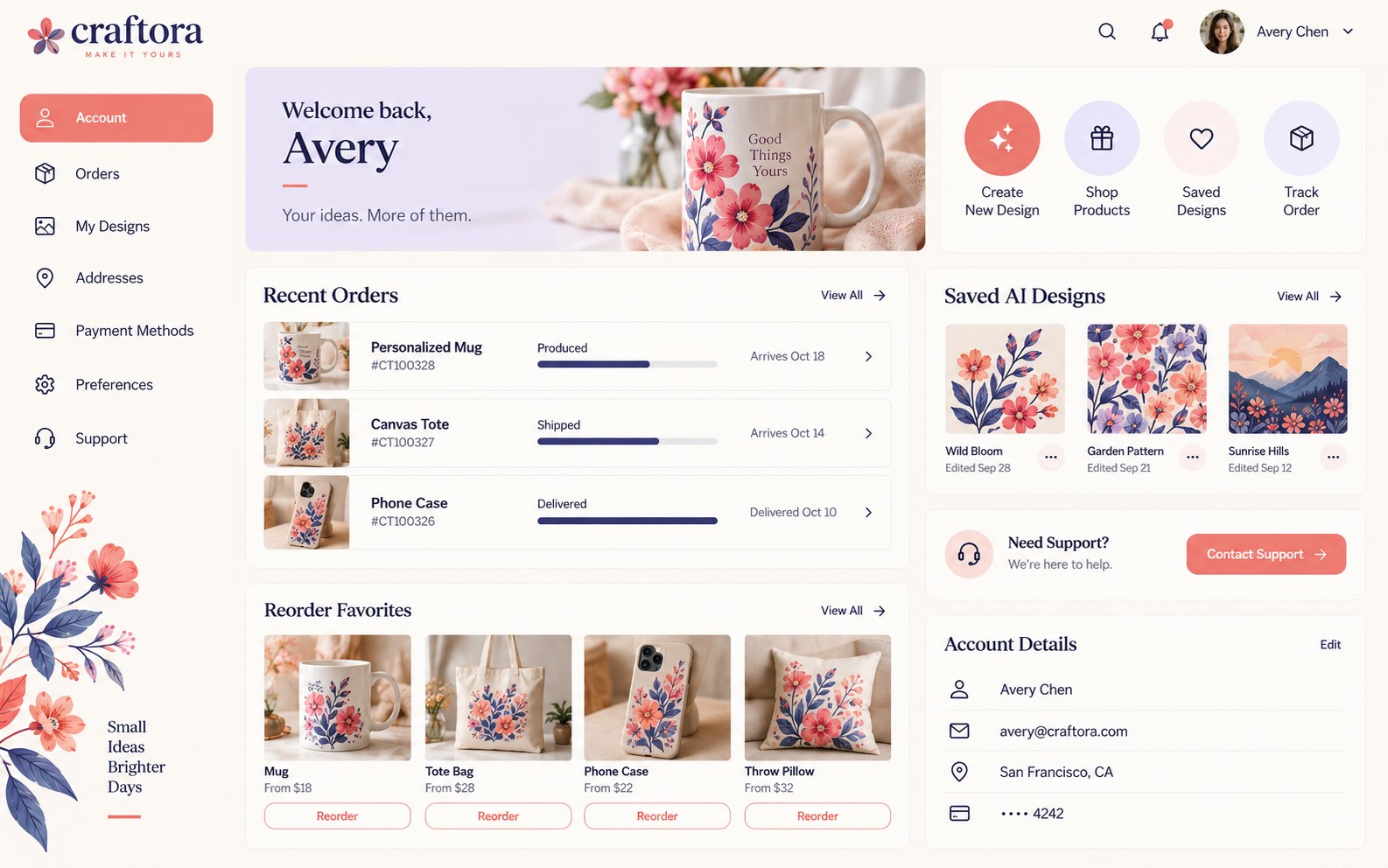
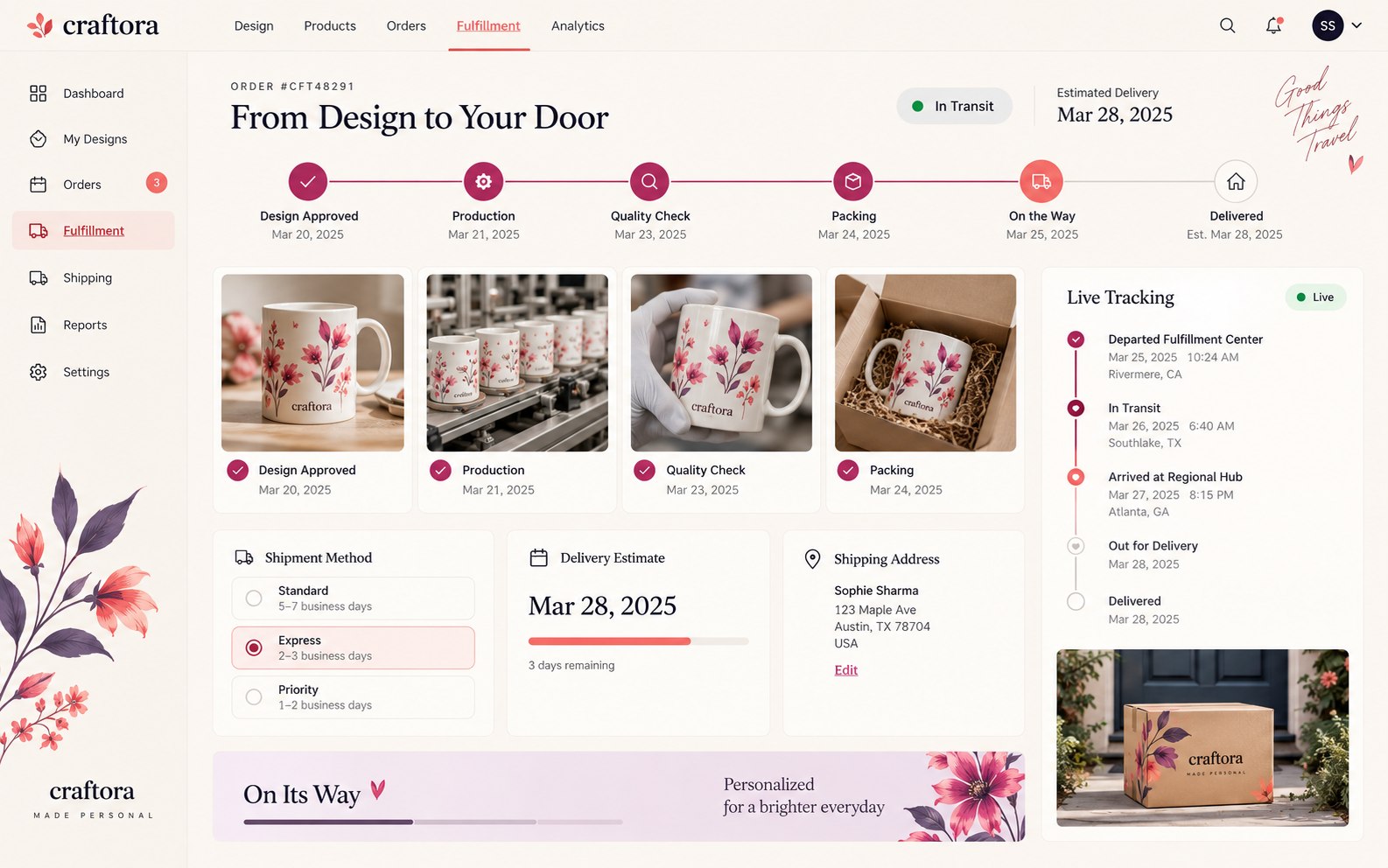
AI customized product orders, design and logistics unified customer backend
07 · Customer Portal

Customer Portal: From Design to After-Sales

Allow customers to centrally view saved ideas, order status, production progress, logistics tracks and after-sales communications, and support re-purchase within the scope of compliance.

  • My designs and materials
  • Order and production milestones
  • Logistics track and receipt
  • After-sales, refunds and repurchases
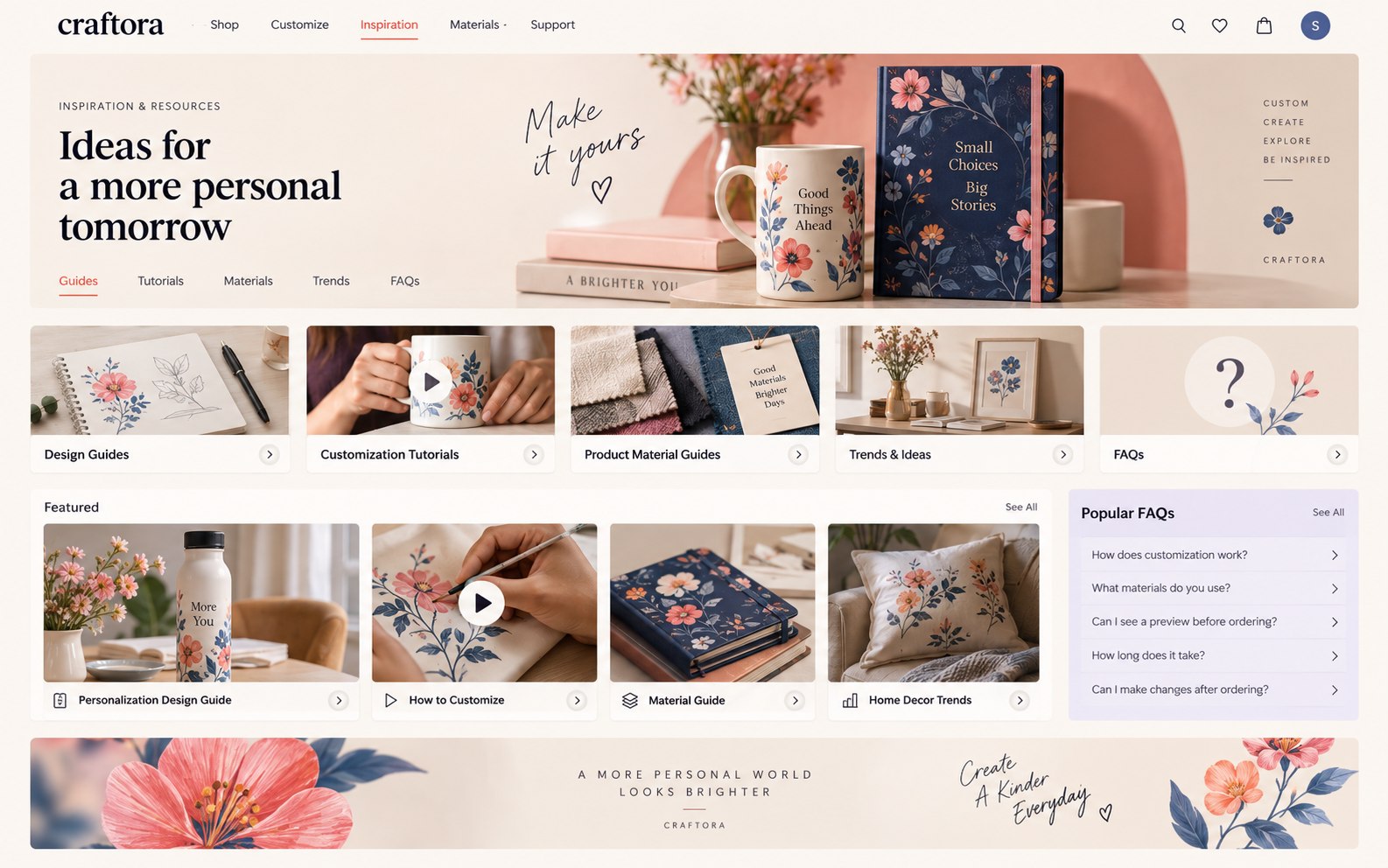
Resource center for personalized product design guides, inspirational content, and FAQs
08 · Resources

Resources: Design Inspiration and Guidelines

Create searchable content around design methods, image quality, size, materials, craftsmanship, gift-giving scenarios and frequently asked questions, and connect to corresponding products.

  • Design Tutorials and Inspirational Topics
  • Picture, size and color guide
  • Material and production process description
  • SEO/GEO themes, FAQs and internal links
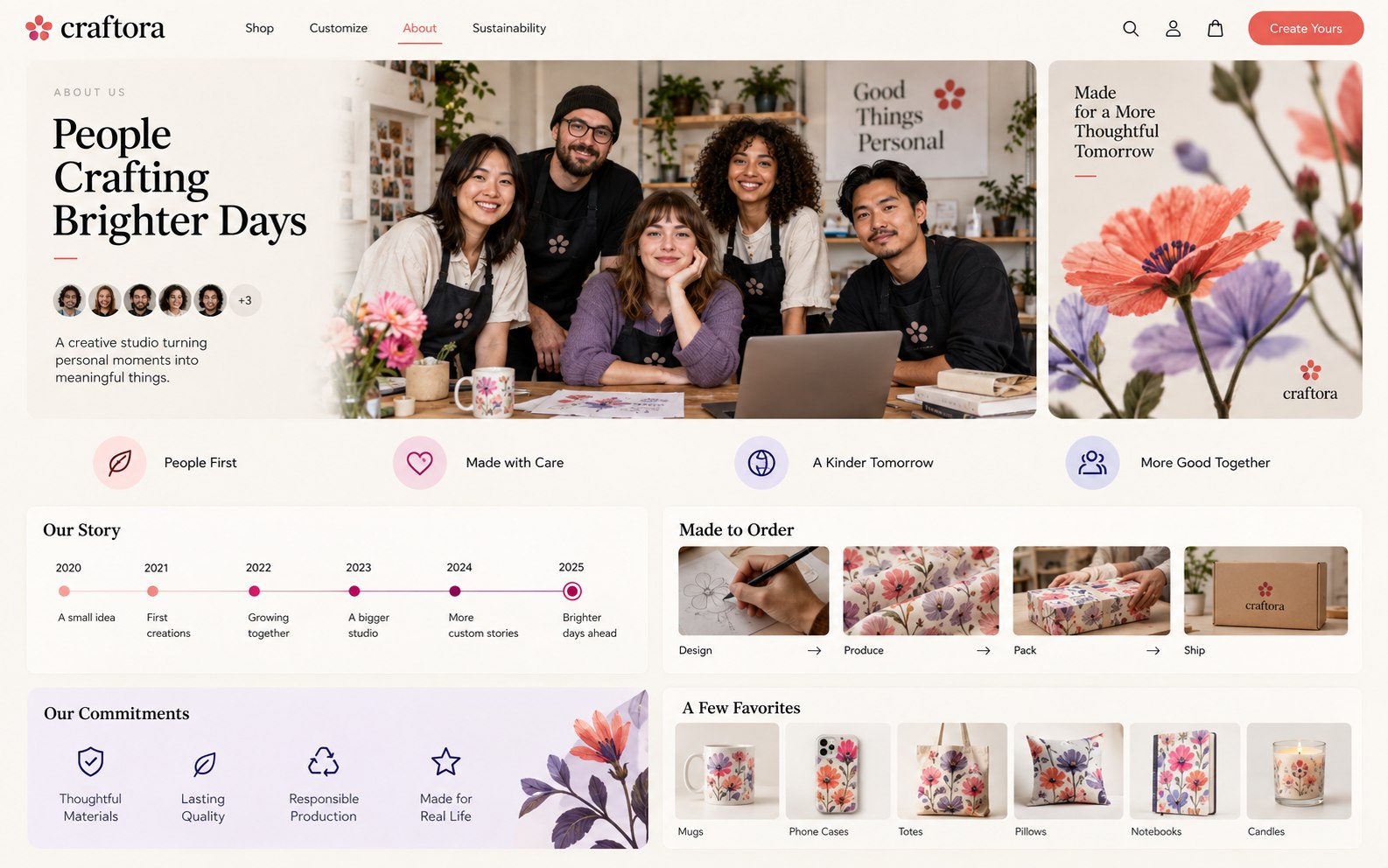
Consumer goods customization brand team, value and on-demand production introduction page
09 · About

About Us: Brand, Team and Production

Present the business entity, brand concept, team, materials and on-demand production methods, and clarify the respective responsibilities of the platform, producers and service providers.

  • Brand story and team
  • Materials, workmanship and quality commitment
  • production or cooperation network
  • Contact information and business entities
Personalized product production, quality inspection, packaging and distribution logistics system page
10 · Logistics

Logistics: Lead Times, Shipping and Tracking

Select the delivery method based on the product, packaging, weight, destination and promised timeliness, and synchronize production completion, shipment, receipt and exceptions to customers.

  • Delivery areas and service methods
  • Freight calculation and timeliness
  • Shipping, tracking and receipt
  • Damage, lost parts and exception handling
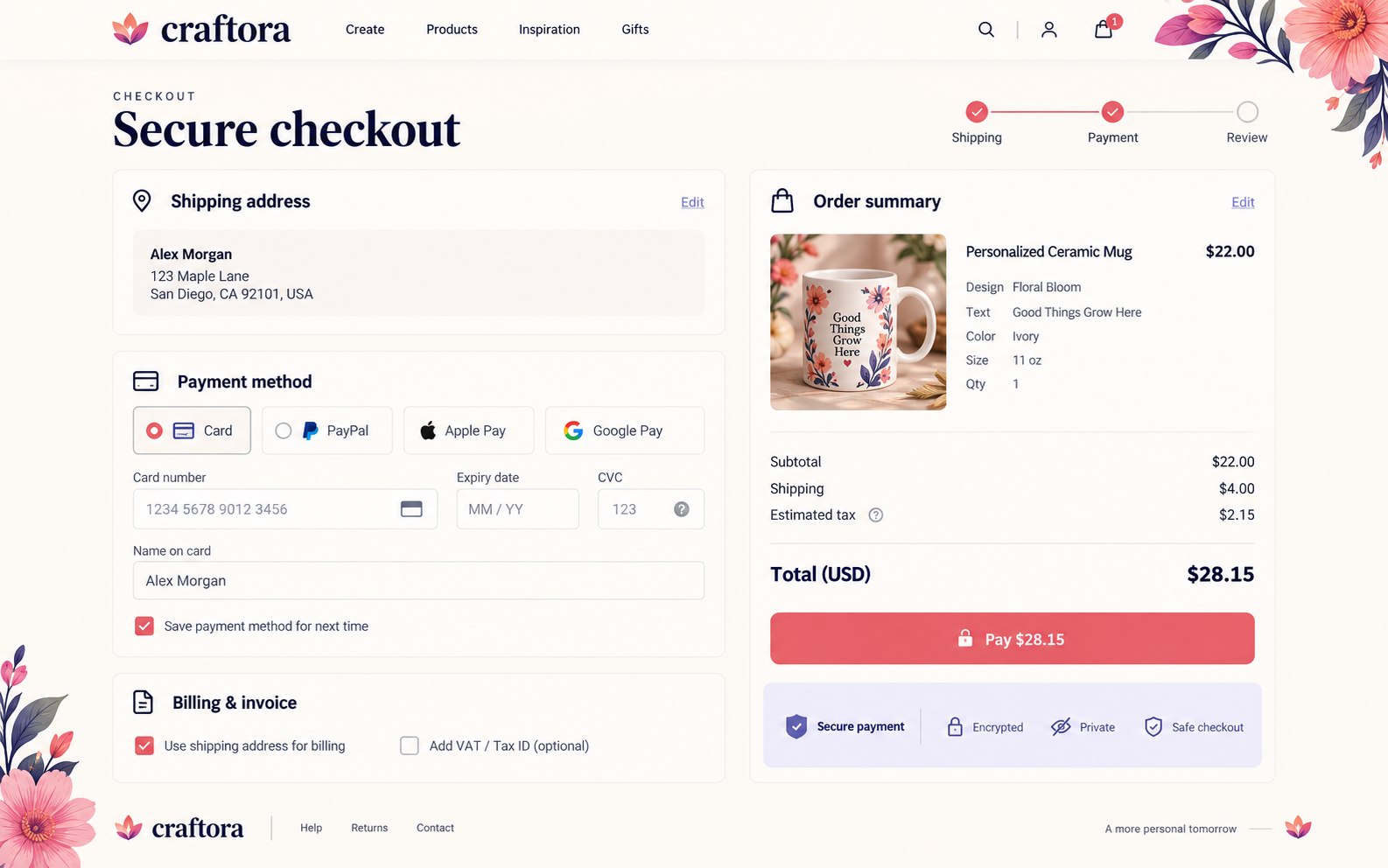
Personalized product checkout, payment, tax and order confirmation pages
11 · Payment

Payments: Prices, Taxes, Shipping and Refunds

Configure payments, callbacks, taxes, invoices, offers and refunds based on target market and account qualifications, and ensure custom item limits are clearly visible before payment is made.

  • Online payment and order confirmation
  • Prices, offers, taxes and shipping
  • Payment callback, closure and reconciliation
  • Refund conditions and status synchronization
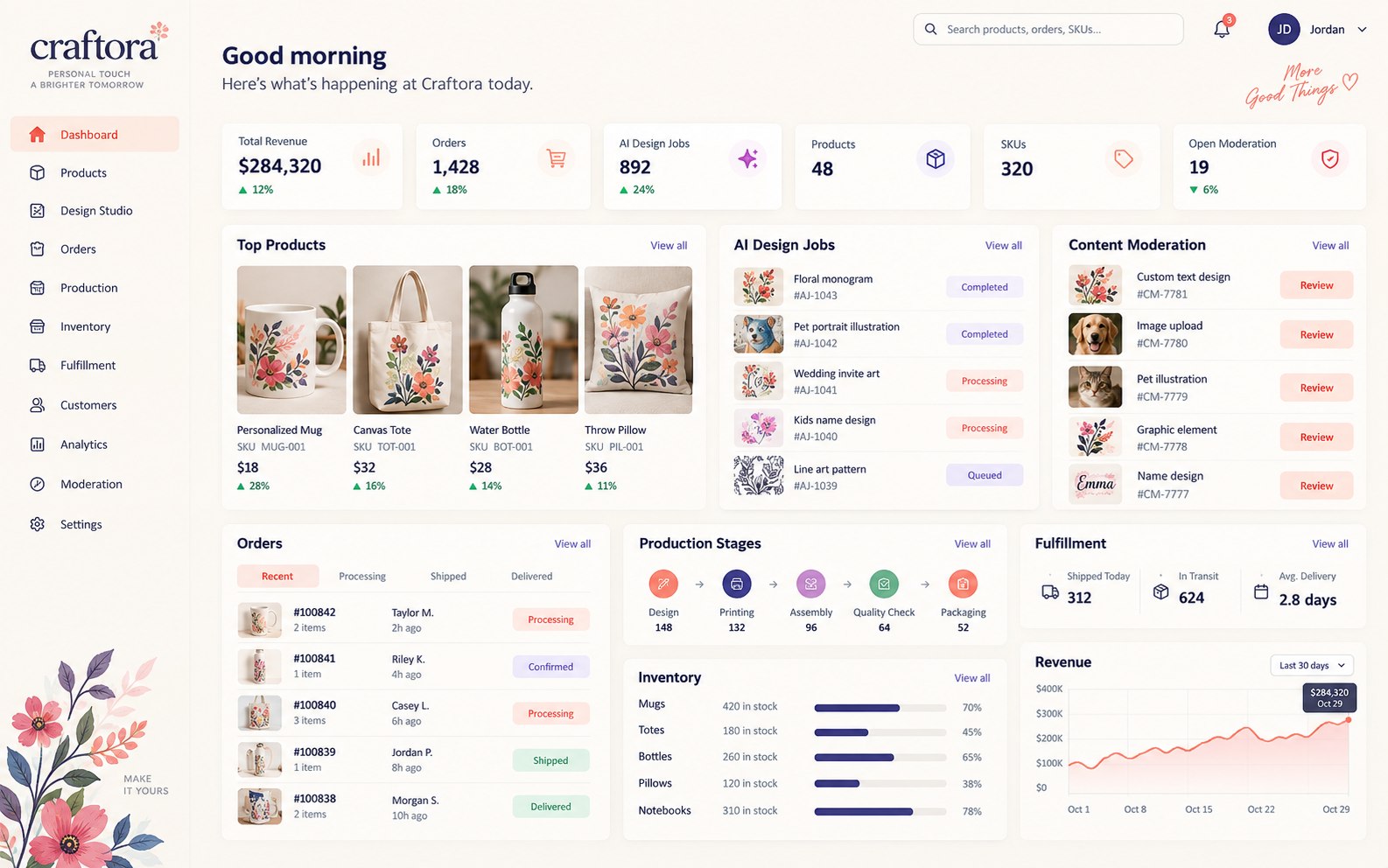
Commodity, AI design tasks, content review, order and production business management system
12 · Operations

Business System: Products and Custom Orders

Connect product SKUs, AI generation tasks, content review, customers, orders, production, inventory, logistics and financial data to form a traceable operational end-to-end workflow.

  • Products, SKUs and customization rules
  • AI tasks and content review
  • Orders, production and inventory
  • Logistics, after-sales and operation analysis
AI consumer goods customization platform website building process

Nine Steps from Product Rules to Launch

First establish credible brands, products and customization rules, and then let AI plan the platform and user paths; after development, complete model, payment, logistics, production and formal environment verification.

STEP 01

Create corporate brand information files

Establish a unified and verifiable source of truth for the enterprise and brand, allowing mall content, AI-generated boundaries, customer notifications and business systems to maintain a consistent identity.

BRAND CORE Unified Brand Master Profile Unified management of brands, goods and services
brand identity target group value proposition visual system

Brand facts precede creative expression

The business entity, brand positioning, target customers, product range and contact information must be verifiable; the generated content must not fabricate authorization, materials, origin or delivery commitments.

  • Company and brand name
  • Brand positioning and core business
  • Target customers and consumption scenarios
  • Scope of goods and services
  • Brand Strength and Credible Evidence
  • Logo, brand colors and fonts
  • Contact information and business entities
  • Content authorization and usage boundaries
STEP 02

Organize basic product and customization information

Convert product classification, SKU, specifications, customizable areas, materials, colors, prices, pictures and production requirements into structured records that can be displayed at the front desk and executable by the system.

Products and SKUs Category · Specification · Color PRODUCT
Customized area Front · Back · Part AREA
Materials and craftsmanship Printing · Embroidery · Heat Transfer CRAFT
Price and delivery Cost · Quantity · Production DELIVERY

Build Reliable Product Master Data

The same product record should serve product selection, designer, shopping cart, production documents and business backend at the same time to avoid conflicts between display specifications and actual production capacity.

  • Product categories and SKU codes
  • Specifications, sizes, materials and colors
  • Customizable surfaces and safety areas
  • Images, models and preview assets
  • Basic price and additional charges
  • Production process and documentation requirements
  • Minimum order quantity, inventory and delivery time
  • Packaging, quality inspection and after-sales boundaries
STEP 03

Determine AI design and customization rules

Clarify the available scope and exception handling for image upload, AI generation, style templates, text and pattern editing, preview, production verification and content review.

Material upload AI generated Online editing Effect preview Audit verification
creativity
rules

Keep Creative Designs Within Production Limits

Each generation and editing action must be associated with products, customization areas, output specifications and review rules; passing the preview does not mean that the production file is qualified.

  • Material format, size and licensing statement
  • Models, prompts, and style templates
  • Text, pattern and color tools
  • Layers, Undo, and Versioning
  • Customized areas and safe margins
  • Resolution and production file verification
  • Sensitivity and infringement risk review
  • Failures, retries, and manual processing
STEP 04

Determine transaction and performance plan

Clarify product pricing, payment, logistics and freight, refund after-sales, order processing and production delivery rules so that consumers understand key boundaries before payment.

ORDER Pricing and Payment
PRODUCTION Production and quality inspection
DELIVERY Logistics and after-sales

Define Order States Before Building Interfaces

Every status change in payment, review, production, quality inspection, packaging, shipping and after-sales requires trigger conditions, responsible persons, customer feedback and exception paths.

  • Commodity and customization surcharges
  • Payment, Taxes and Promotional Rules
  • Logistics methods and freight plans
  • Order confirmation and design lock
  • Production, quality inspection and packaging processes
  • Inventory and on-demand production relationship
  • Refund, After-sale and Redo Conditions
  • Abnormal orders and manual upgrades
STEP 05

Plan the Platform and Customization Workflow

AI plans the complete path of product selection, material upload, AI design, online editing, effect preview, order payment and production delivery based on brand, product, customization and contract fulfillment rules.

Select product
Upload material AI design Online editing Effect preview Place order and pay production delivery

Design Data and Workflows Before Coding

Public products, customer materials, generation tasks, orders and production data have clear boundaries respectively, and SEO/GEO, entities, FAQ and internal link planning are completed at the same time.

  • Columns, pages and URLs
  • Product, material and design fields
  • AI generation and review status
  • Shopping cart and order state machine
  • Customer, Employee and Production Permissions
  • CTAs, notifications and exception rules
  • SEO Metadata and Schema
  • GEO entities, FAQ and internal links
STEP 06

AI development consumer product customization platform

Develop the city, designer, AI generation, customer backend and business system according to the confirmed architecture, and continuously verify it with representative products and orders.

customization.platformAI ASSISTED
01 Product mall and content
02 AI generation and editor
03 Order and production backend
04 SEO, security and data
Responsive Permissions Traceable Expandable

Validate with Real Products and Production Rules

Verify with representative orders of different products, materials, customization aspects, picture quality, styles, quantities and delivery methods to avoid the platform being only effective for ideal examples.

  • Mall page and content components
  • Material upload and secure storage
  • AI generation and online editor
  • Product preview and production verification
  • Customer Accounts and Orders
  • Business backend and production interface
  • Responsiveness, performance and security
  • SEO, Schema and Monitoring
STEP 07

Connecting AI generation, payment and logistics systems

Connect model generation and review, payment refunds, freight calculations, shipments and logistics tracks based on the service provider's formal capabilities, and synchronize the status to the order and backend.

AI model Content moderation payment gateway Logistics services
Platform
Zhongtai

Verify Interfaces, Accounts and Data Access

First confirm qualifications, production permissions, billing, limits, callbacks and data compliance; any unauthorized or unstable capabilities must not be regarded as delivered features.

  • Model and generation interface permissions
  • Moderation, quotas and downgrades
  • Payment callbacks, refunds and reconciliations
  • Logistics methods and freight
  • Synchronization of production documents and orders
  • Shipping and track query
  • Interface logs, retries and idempotence
  • Key and personal data security
STEP 08

Test Design, Checkout and Order Workflows

Covers normal, boundary, failure and recovery scenarios, and verifies the complete status chain from products, materials and generation tasks to preview, review, payment, production and logistics.

96% scene coverage
AI generated Custom preview Pay order Production logistics

Check Previews Against Production Benchmarks

Not only verify that the page works, but also check dimensions, colors, customization areas, output files, permissions, pricing, status, and notifications with known production samples.

  • Image format, quality and unusual material
  • Build, review, and fail retries
  • Editor boundaries and version recovery
  • Preview and production file consistency
  • Cart, order and design lock
  • Payment success, failure and refund
  • Production, quality inspection and logistics status
  • Mobile, performance and security
STEP 09

Domain name, server and deployment are online

Complete the official domain name, certificate, server, AI and payment logistics production configuration, search platform and monitoring, and execute the real small custom order end-to-end workflow.

Domain name/SSL AI production configuration Payment and Order Production and Logistics Search and monitor
formal
Go online

Validate Launch with Real Custom Orders

The accessibility of the page is only the starting point. It is also necessary to confirm that the generation, editing, review, payment, production documents, notifications, backend and logistics status can flow correctly.

  • Domain name, DNS and SSL
  • Servers, CDN and Backup
  • AI, payments and logistics production configuration
  • Email, SMS and notifications
  • Canonical、Sitemap、robots
  • Search resource platform
  • Analytics and conversion events
  • Real orders and security checks
FAQ

FAQs on AI consumer goods customization platform

First clarify the products, customization areas, AI generation, content review, production documents, prices and performance rules, and then determine the scope of the platform, interfaces and business systems.

Which businesses are suitable for the AI consumer product customization platform?

Suitable for clothing, bags, cups, shoes, mobile phone cases, home furnishings, gifts and other consumer goods businesses that can be personalized by pictures, text, color or layout. The project must first confirm the customizable products, production methods, minimum order quantities and performance boundaries.

What customization operations can consumers complete on the platform?

You can select products according to the project scope, upload materials, enter generation requirements, select styles, edit text and patterns, adjust position and size, view effect preview, save the design, add to the shopping cart and place an order. The operations supported by different commodities are determined by production rules.

Can AI-generated designs be used directly in production?

Direct production should not be the default. The platform needs to check image resolution, color mode, printable area, bleed, safety margin and content compliance, and enter manual review if necessary; only designs that pass production verification can form formal production documents.

How to control copyright and compliance risks of AI-generated content?

It should be combined with user declarations, input and output review, sensitive content rules, similar risk reminders, manual review, operation logs and complaint handling mechanisms. The platform cannot replace legal judgment, and companies must formulate enforceable rules for specific copyright authorization and prohibited content.

Can the platform connect existing AI models, payment and logistics services?

Yes, but you need to confirm the model, payment and logistics service provider's official account, interface authority, regional scope, billing, limit and data compliance requirements before designing a call, callback, retry, downgrade and reconciliation plan.

Will the product preview be exactly the same as the final product?

Online preview is used to assist decision-making, screen color, material texture, printing or embroidery process will cause differences. The platform should display preview boundaries, production considerations and confirmation mechanisms, and the proofing process can be added to high-value or complex products.

How to hand over customized orders to the production system?

After the order passes the verification, the production documents, product SKU, specifications, customization area, color, quantity, delivery date and packaging requirements can be output, and the production, quality inspection, delivery and after-sales process can be entered through the interface, message or manual workbench.

Does the AI consumer product customization platform include SEO and GEO construction?

Independent URLs, title descriptions, internal links, FAQs, Schemas, and site maps can be planned around product categories, customization scenarios, design themes, materials, processes, and FAQs, making it easier for search engines and AI to understand the boundaries of products, services, and customization.

How are the project cycle and budget determined?

It depends on the number of products and SKUs, custom editing complexity, AI model and review method, preview accuracy, production file requirements, payment logistics interface and business system scope. It is recommended to complete the core end-to-end workflow that can be sold first, and then expand capabilities based on real order feedback.

Start with Real Products and Customization Rules

First confirm the products, customization area, materials, generation, review, price and production fulfillment boundaries, and then jointly determine the mall, AI designer, customer backend, business system, SEO/GEO and online scope.

Consult customized platform solutions