FAQManufacturing Platform FAQs
First clarify the manufacturing capabilities, drawings, costs, quotations, orders and delivery rules, and then determine the scope of the parser, price engine, transaction and business system.
Which companies are suitable for parts manufacturing platforms?
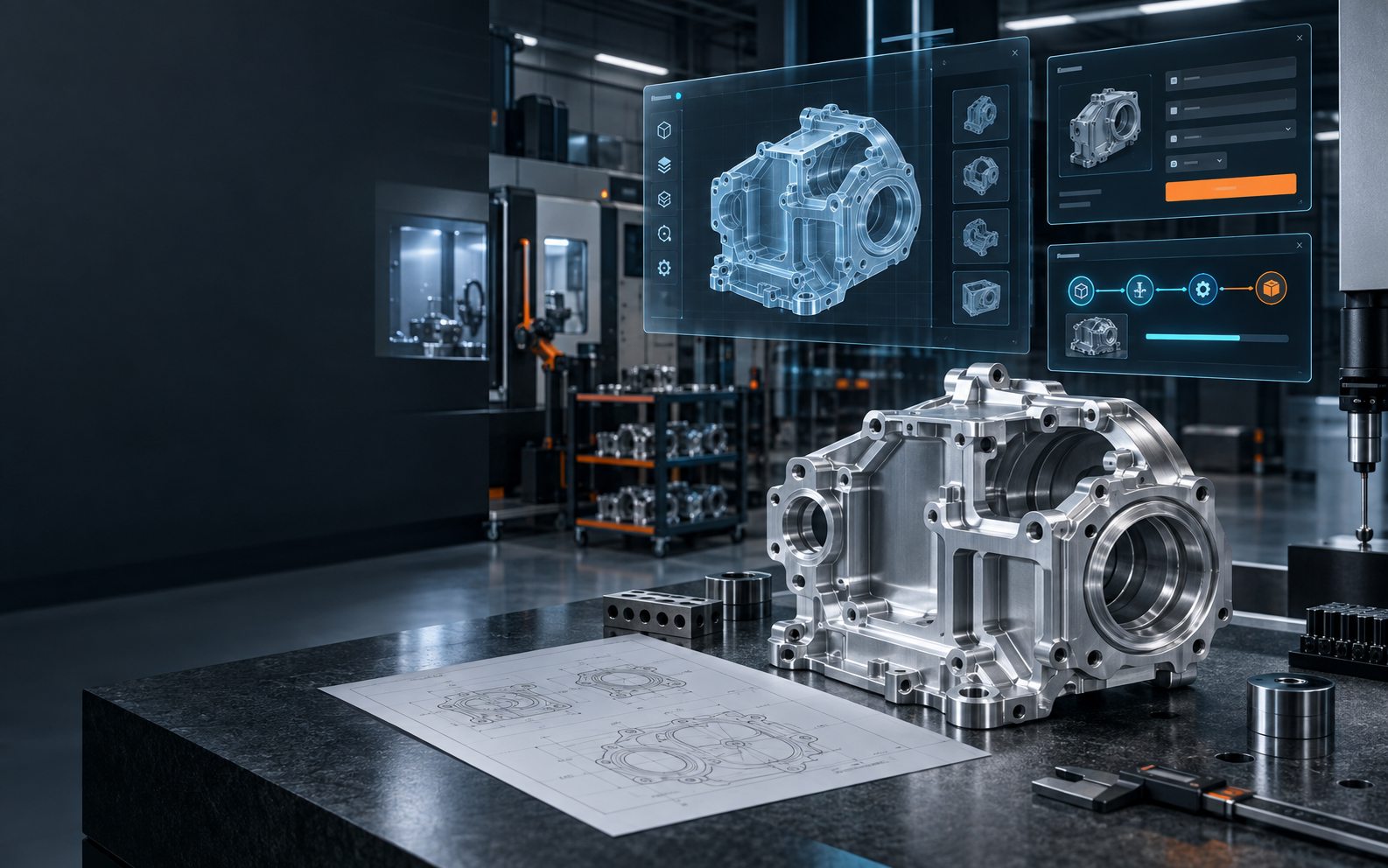
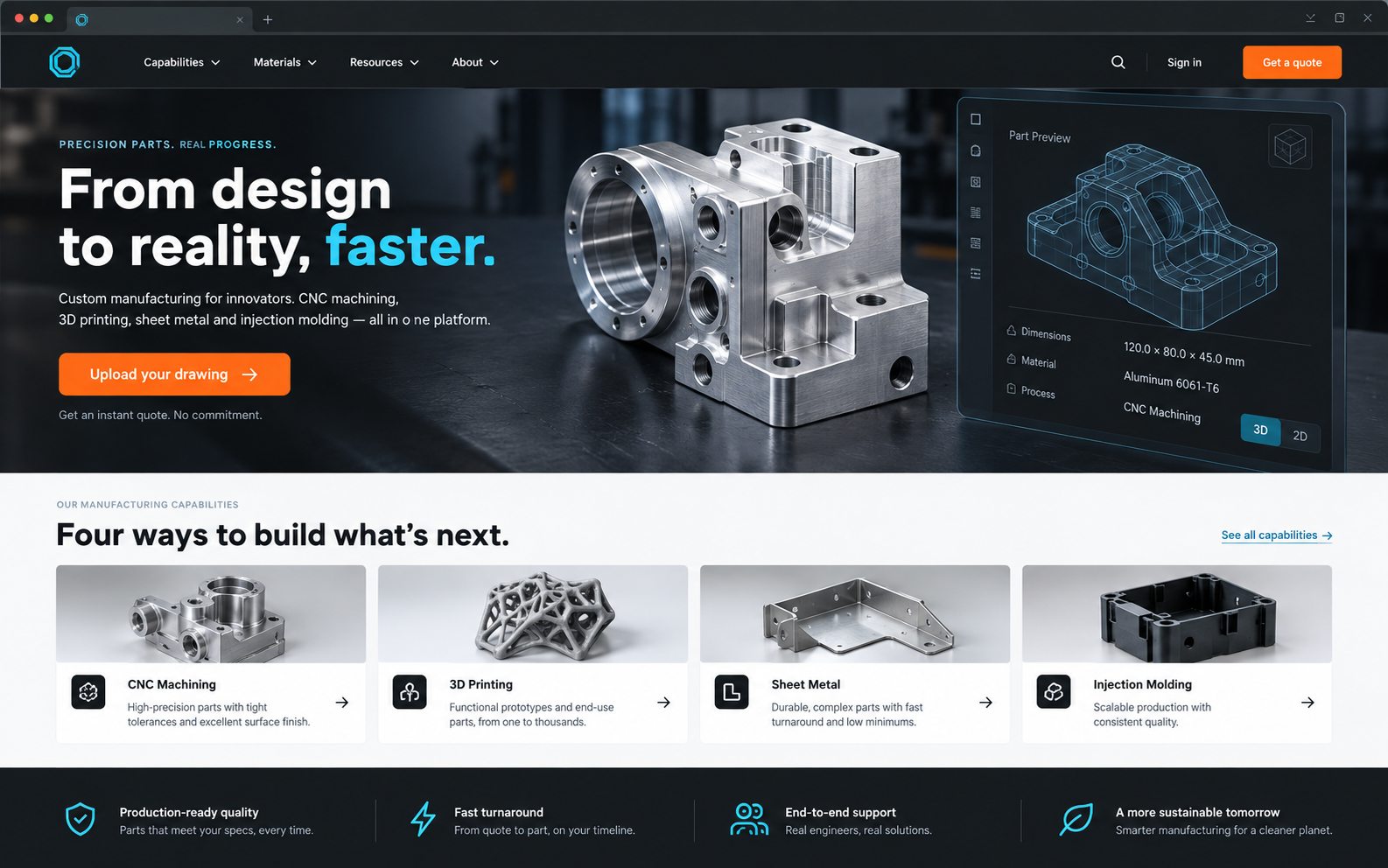
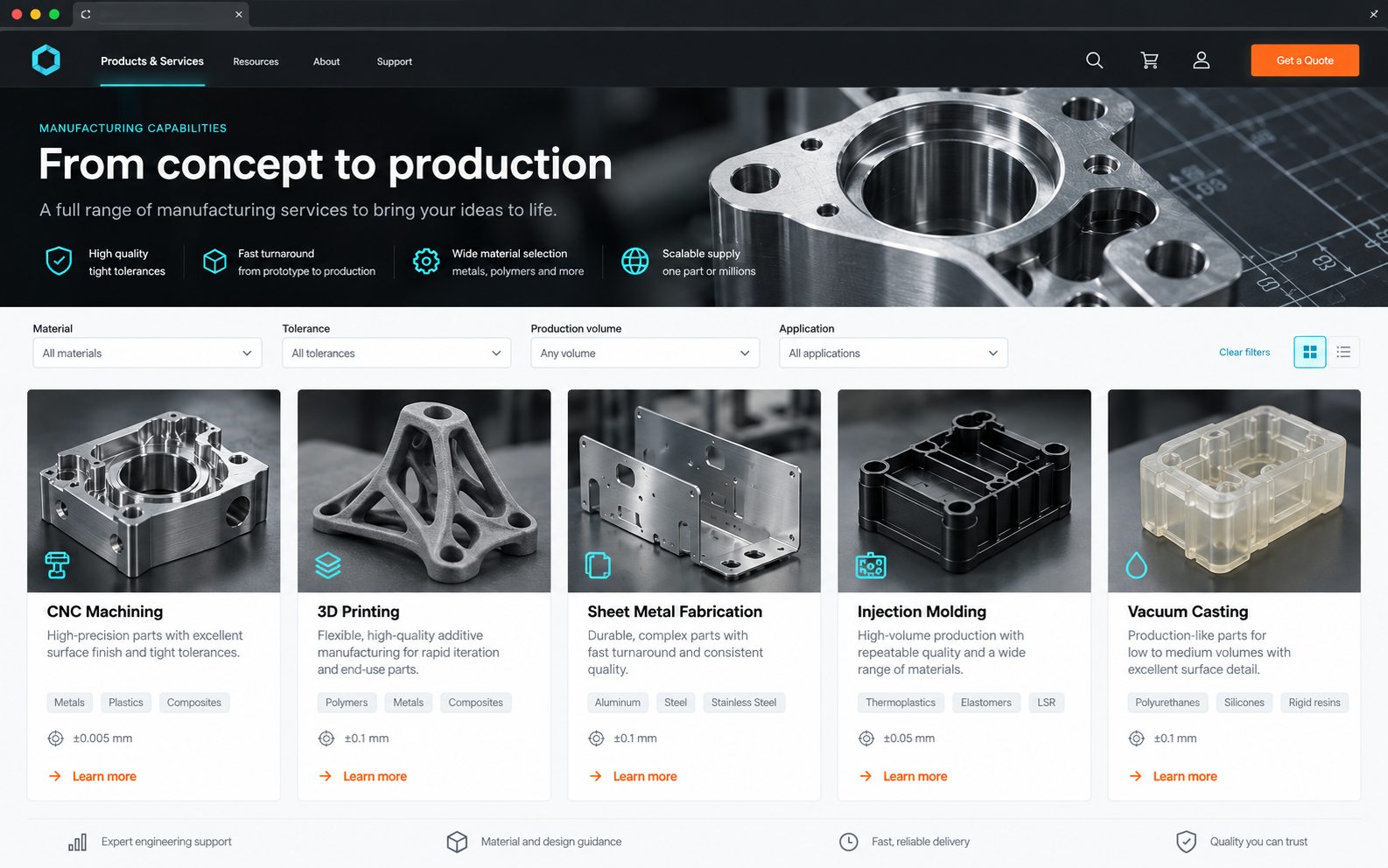
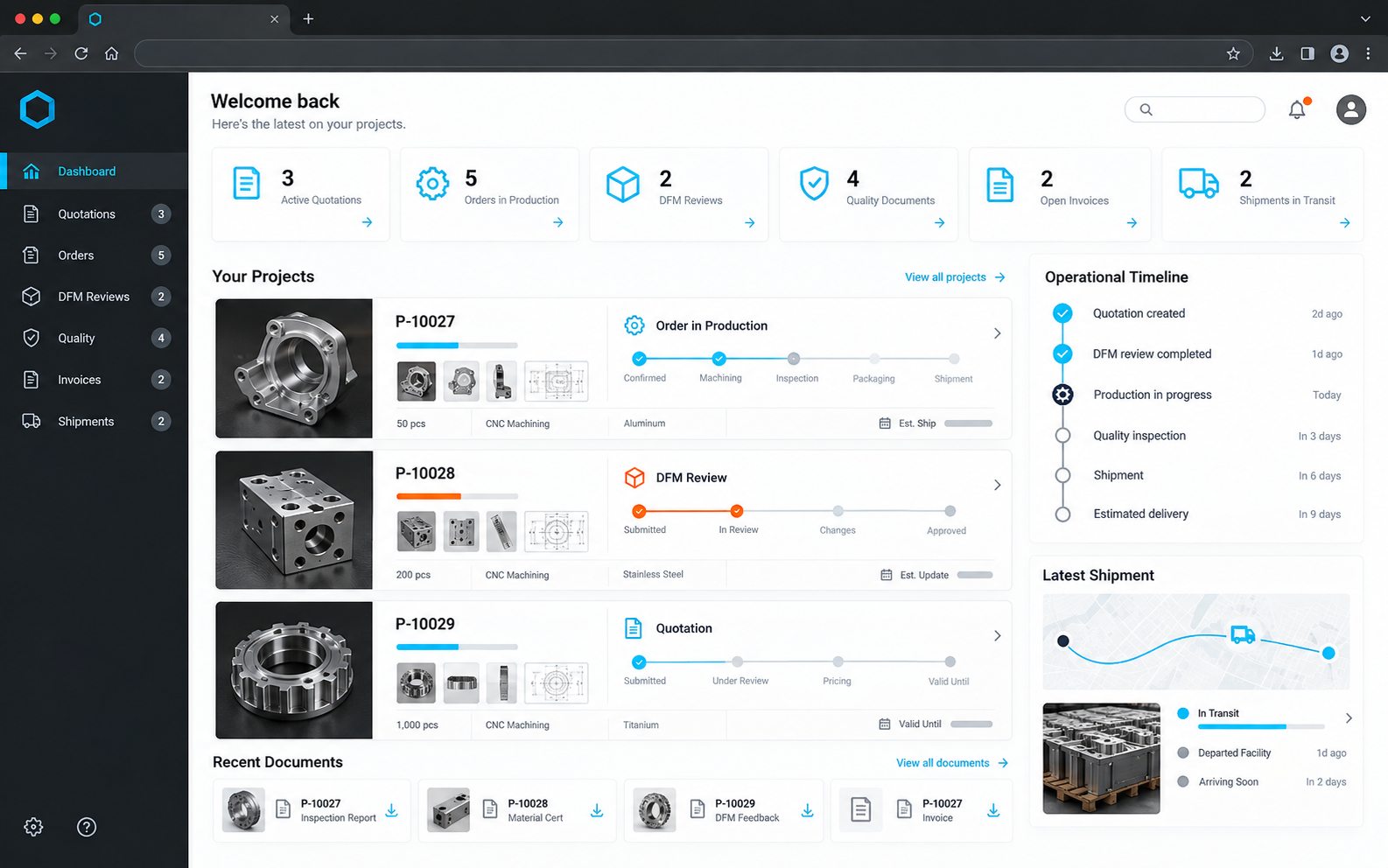
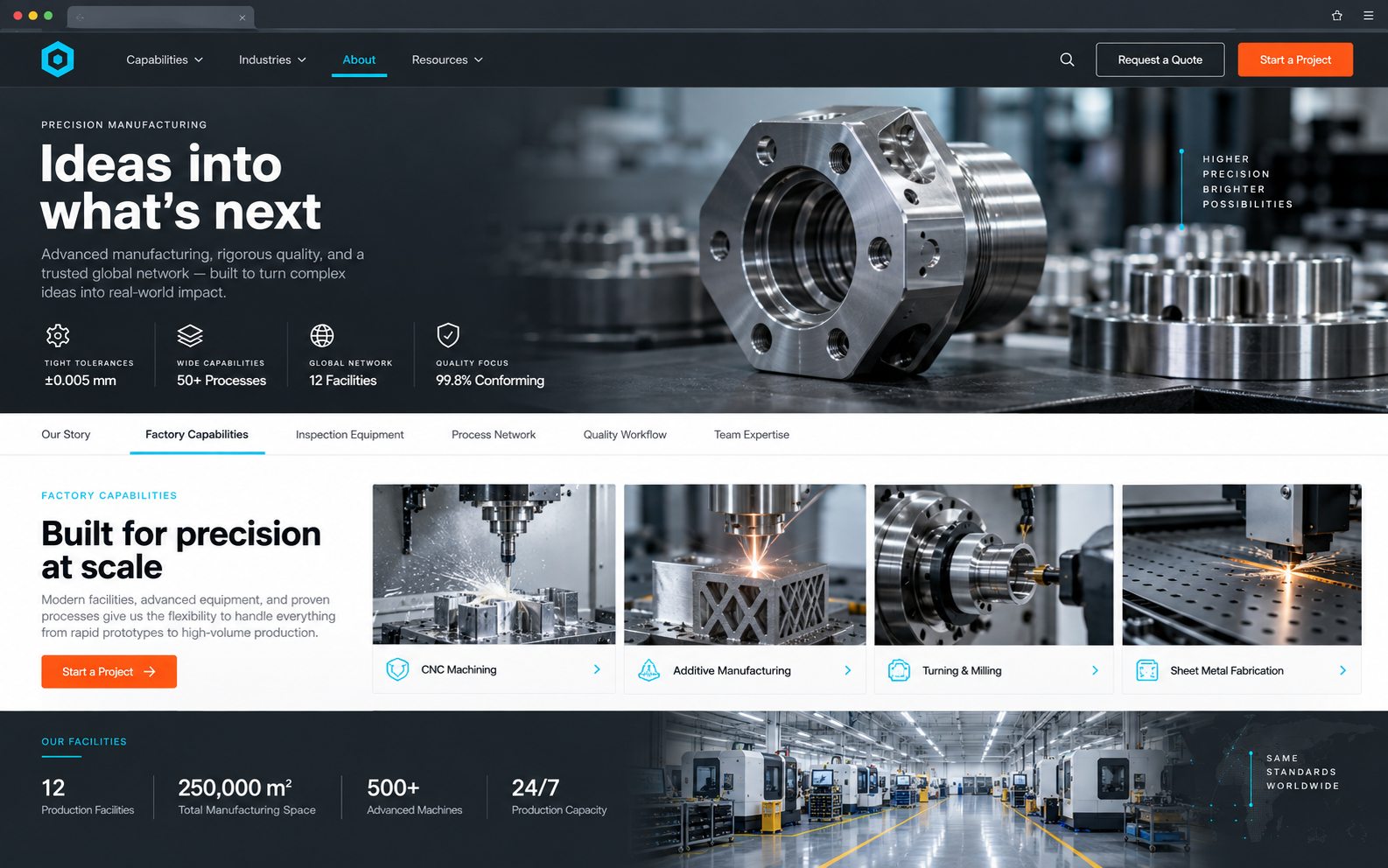
It is suitable for manufacturing companies or service platforms that are engaged in CNC processing, 3D printing, sheet metal, injection molding, molds, replica molds and multi-process collaboration. It is especially suitable for businesses that still rely on emails and chat tools to send pictures and inquires for quotations, and want to uniformly manage drawings, quotations, orders and delivery status.
What 3D and 2D drawing formats does the platform typically support?
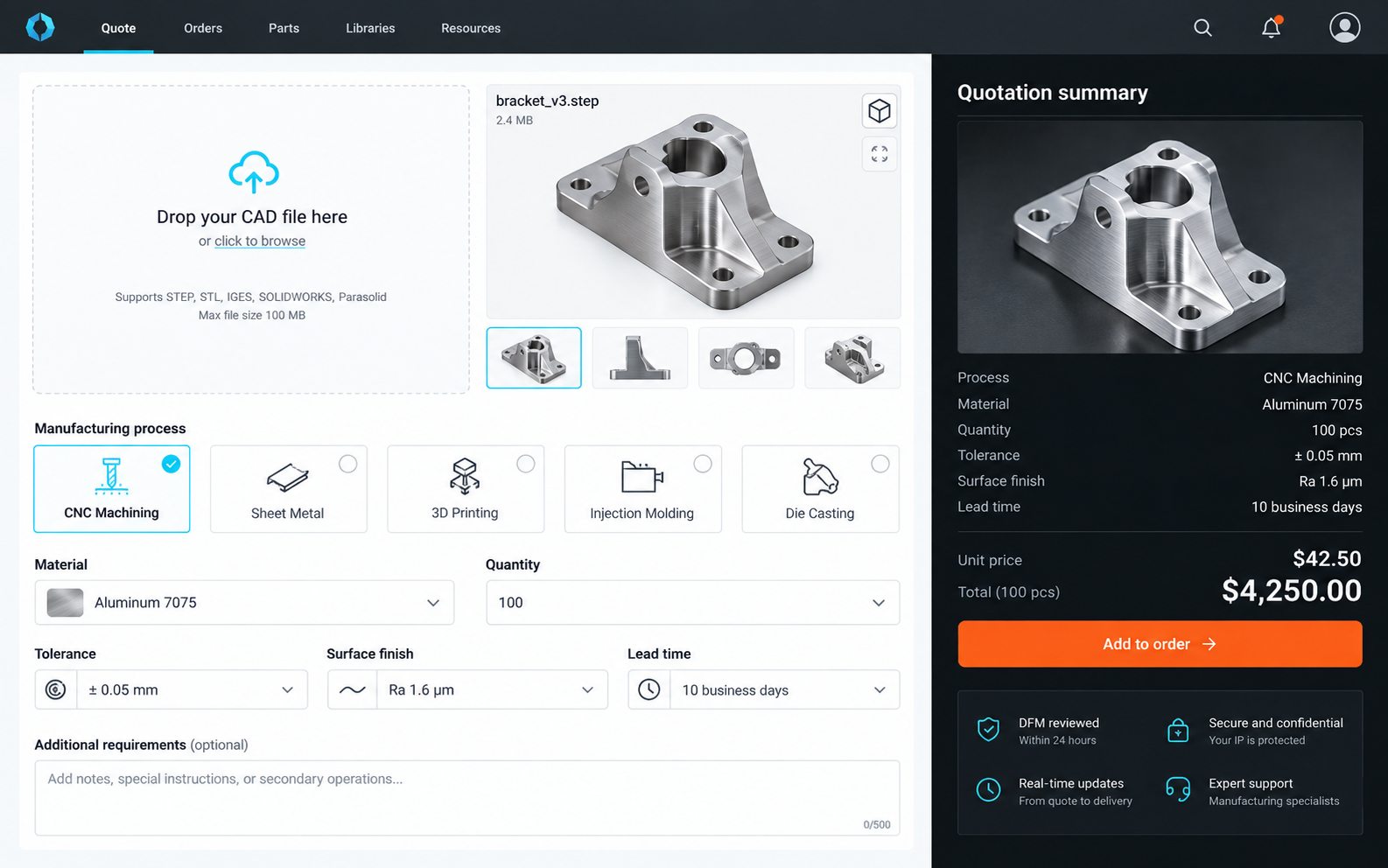
It can support STEP, STP, IGES, IGS, STL, DWG, DXF, PDF and other formats according to the parser and business needs. It is recommended to keep both the 3D model and the 2D drawings to verify critical dimensions, tolerances, materials, surface treatments, and technical notes.
What information can the 3D drawing parser automatically recognize?
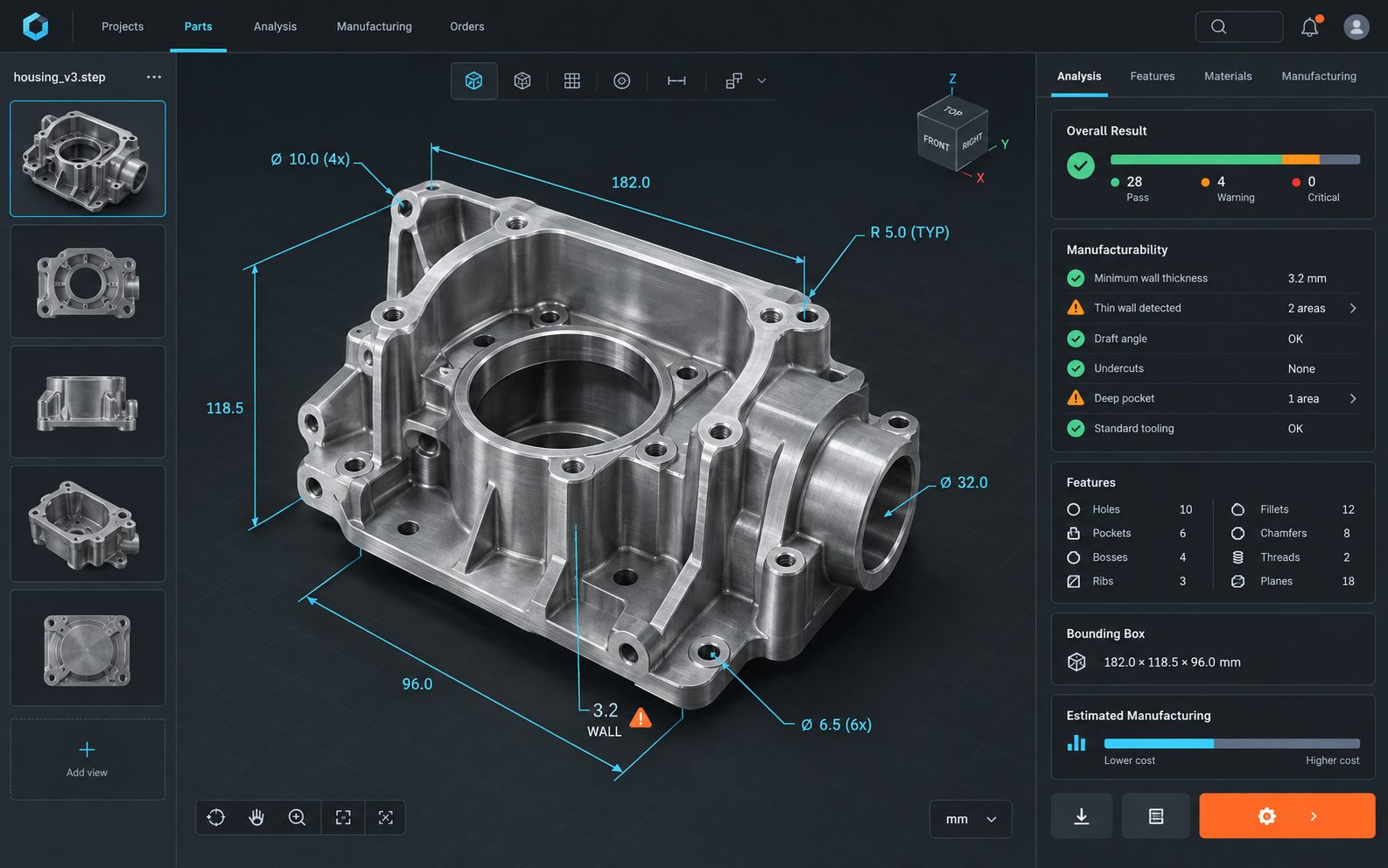
Common scopes include bounding size, volume, surface area, holes, cavities, wall thickness, and partial manufacturability risks. The analysis results are used to assist in parameter filling and quotation, and cannot replace the engineer's final review of tolerances, datums, materials, assembly and process feasibility.
Can automatic quotation completely replace manual quotation?
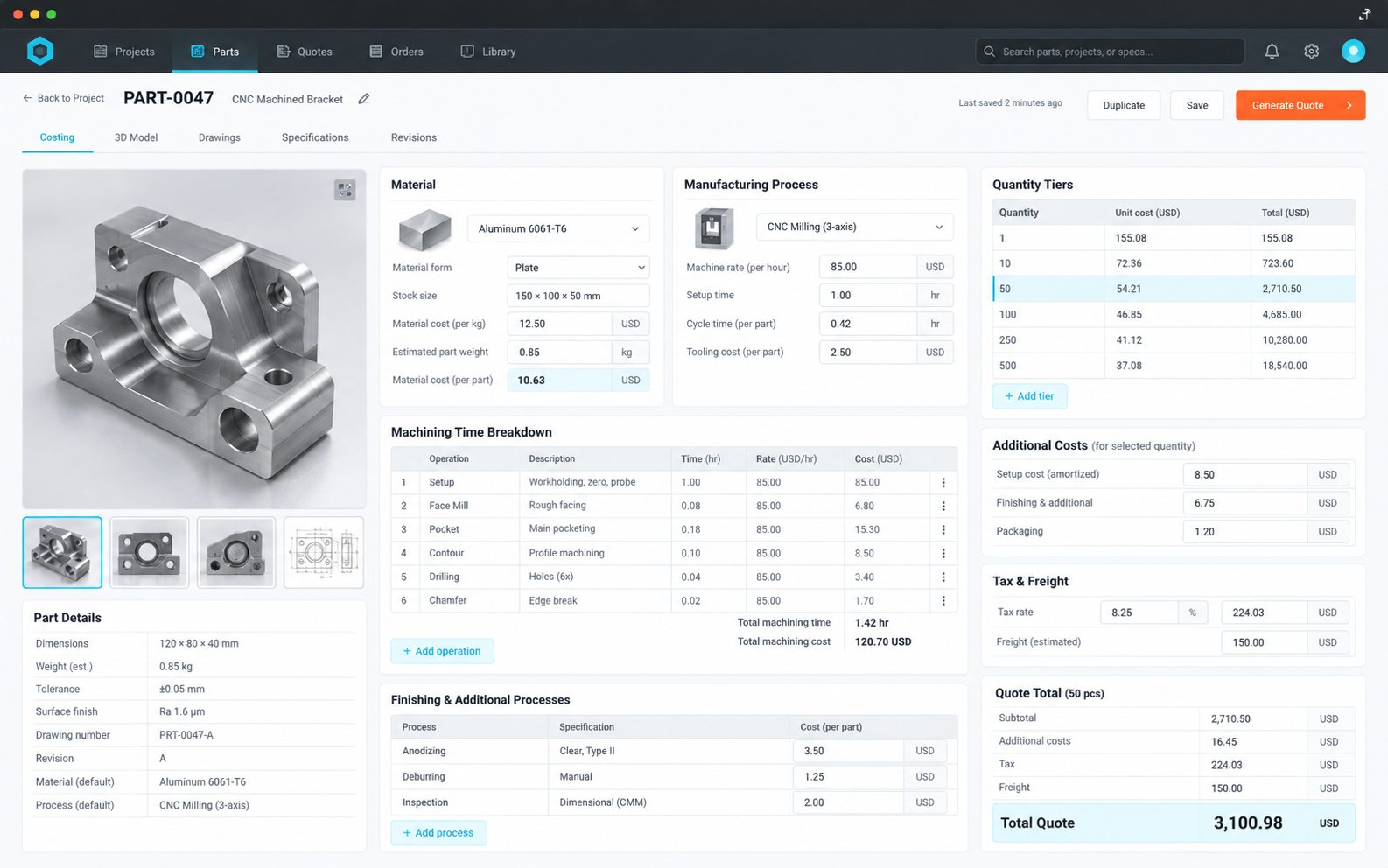
Usually not recommended. Parts with clear standards and rules can quickly generate references or formal quotations; complex geometries, special materials, strict tolerances, outsourced processes and abnormal delivery times should be subject to manual review. The system needs to record calculation details, rule versions, modifiers and approval results.
What data do companies need to provide to build a price calculation engine?
At least material prices and losses, equipment and labor rates, clamping programming and machining hours rules, surface treatment and outsourcing costs, quantity ladders, minimum charges, profits, taxes, packaging and logistics plans are required, and the applicable conditions and update responsibilities of different rules are clearly defined.
Can the platform connect payment, logistics and enterprise operation management systems?
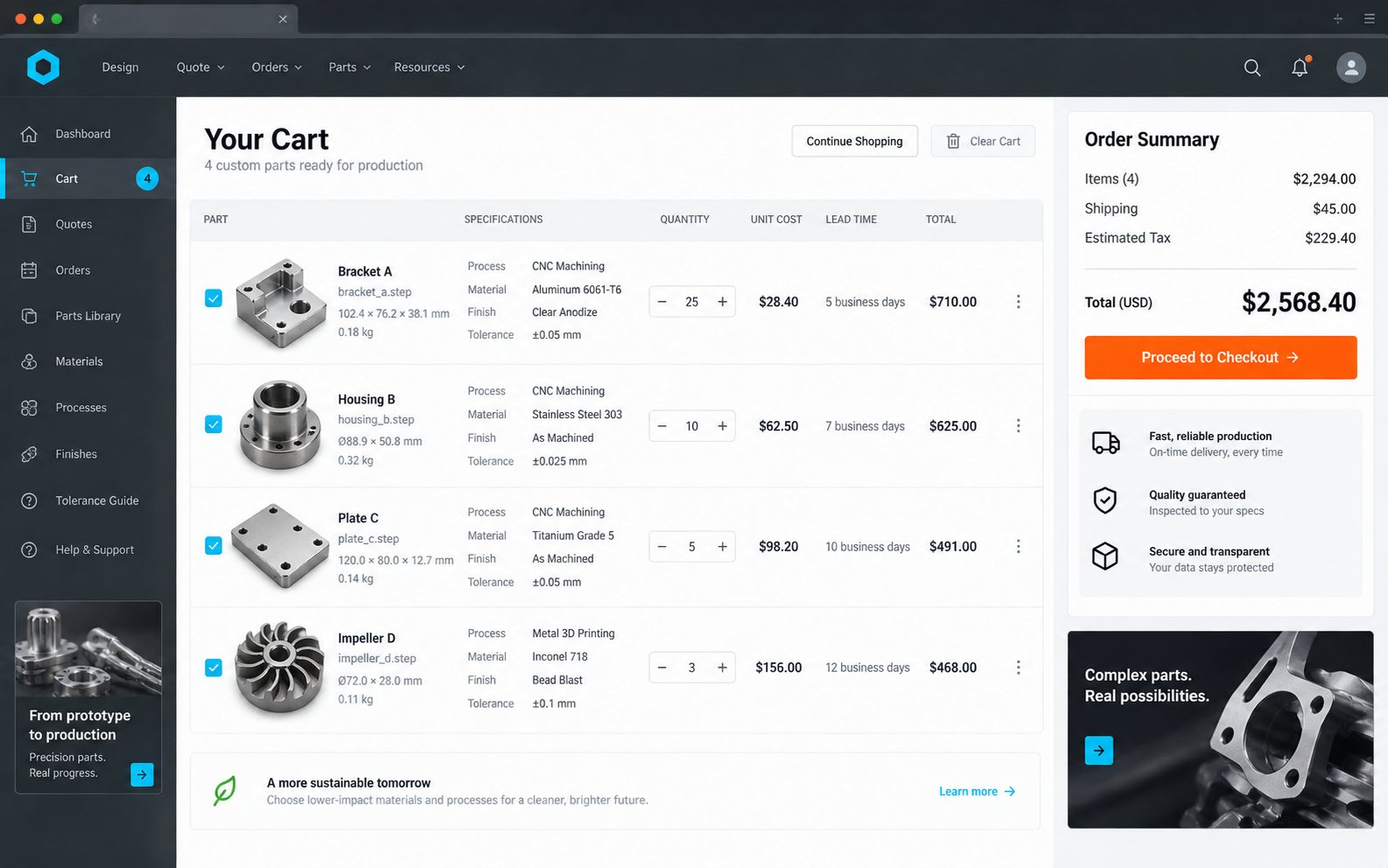
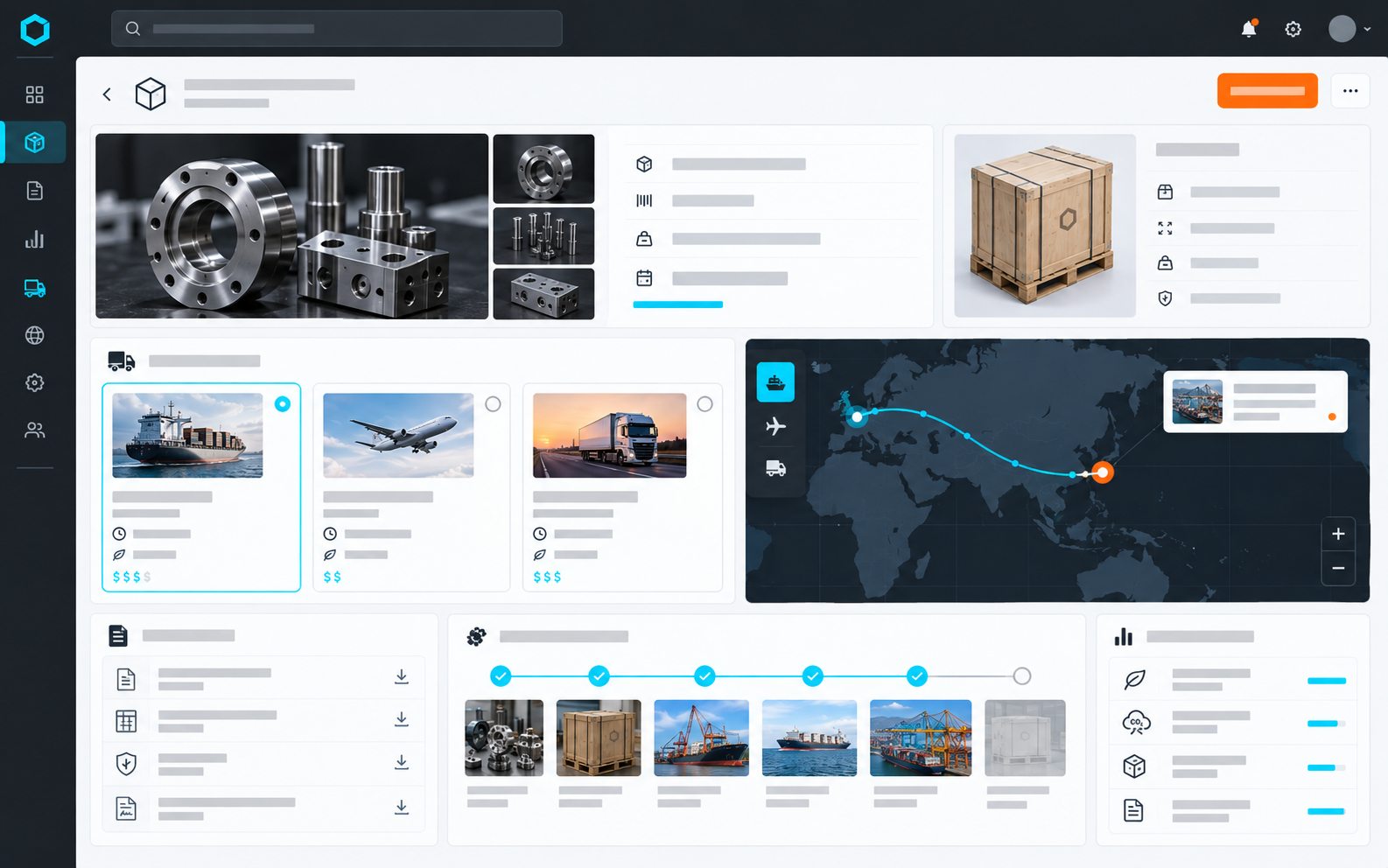
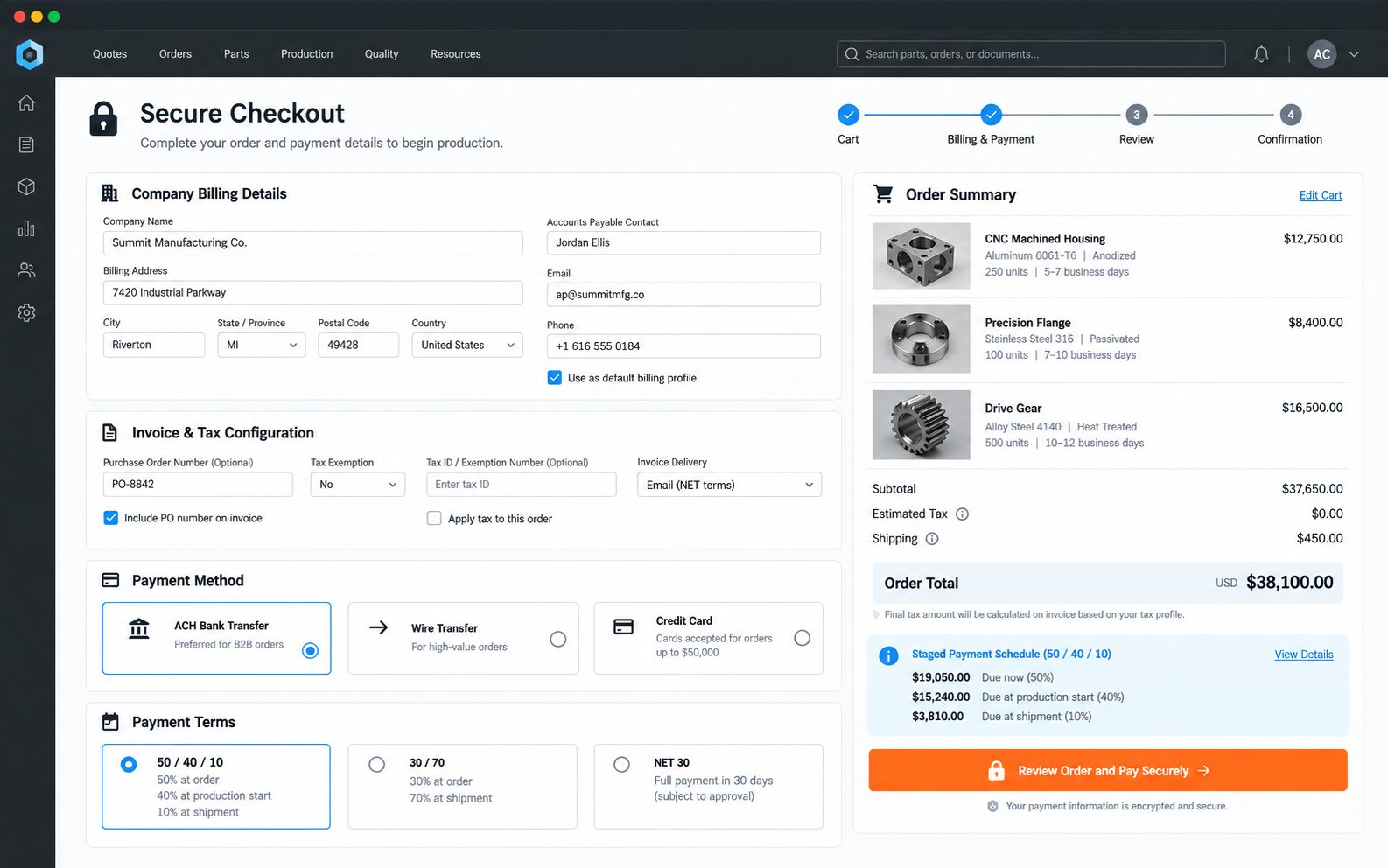
Yes. It is necessary to first confirm the account qualifications, formal interfaces and regional restrictions of the payment and logistics service provider, as well as the master data, synchronization direction, permissions and exception handling in the ERP, CRM or operation management system, and then determine the real-time interface, message or scheduled synchronization plan.
How to protect customer drawings and quotation data?
Account permissions, project isolation, transmission and storage encryption, file access control, operation logs, backups and resignation recycling should be implemented, and downloads, watermarks, validity periods and internal approvals should be configured according to corporate confidentiality requirements. The specific security level needs to be confirmed individually within the project.
Does the parts manufacturing platform include SEO and GEO construction?
Independent URLs, title descriptions, internal links, FAQs, Schemas, sitemaps, and indexability rules can be planned around processes, materials, tolerances, surface treatments, applications, and industry issues, making it easier for search engines and AI to understand corporate entities, manufacturing capabilities, and service boundaries.
How are the project cycle and budget determined?
Basic display and manual inquiry range can be launched quickly; 3D analysis, automatic quotation, payment logistics, customer backend and business system docking will increase the cycle and budget based on drawing format, rule complexity, interface authority, data quality and test scope, and a phased list needs to be formed after research.